
There is a specific silence that happens on a client call when someone asks a fair question you cannot answer. Mine came on a Tuesday, eleven months into my agency's biggest contract, when the owner of a regional HVAC company looked into the camera and asked what, exactly, he was paying me two thousand dollars a month for. The honest answer was: good work I could not prove. Calls were coming in. Jobs were getting booked. And I had no way to show which of them my campaigns had produced. This is the story of the tool that ended those silences - and I wish I had found it before that call instead of after.
Who I am
I am Gina, and I run a three-person marketing agency for local service businesses - HVAC, plumbing, roofing, the trades that live and die by the phone ringing. We run their Google Ads, their local SEO, their landing pages. It is good, unglamorous work, and here is its dirty secret: most of the results arrive as phone calls, and phone calls, unlike clicks, do not politely report where they came from.
The call that almost ended the contract
My client was not being hostile. He was being a businessman. His revenue was up, but he was also running radio spots, a booth at the home show, and word of mouth from twenty years in business. From where he sat, my invoice was the easiest line item to question.
I know the phone's ringing more. I just don't know if that's you, the radio, or the fact that it finally got hot out. Help me out here.
I sent him a report full of clicks, impressions, and a conversion number I only half-believed myself. He was polite about it. We both knew it did not answer the question. The renewal conversation got postponed, which every agency owner knows is what 'no' sounds like when it is being kind.
What I tried before
- Google Analytics goals - fine for form fills, blind to the 80 percent of this client's leads that arrived by phone.
- Asking the front desk to log 'how did you hear about us' - customers say 'Google' whether they came from an ad, a map listing, or a bookmark, and a busy dispatcher stops asking by Thursday.
- A homegrown spreadsheet matching call times to campaign schedules - detective work that consumed my Fridays and convinced no one, least of all me.
The turning point
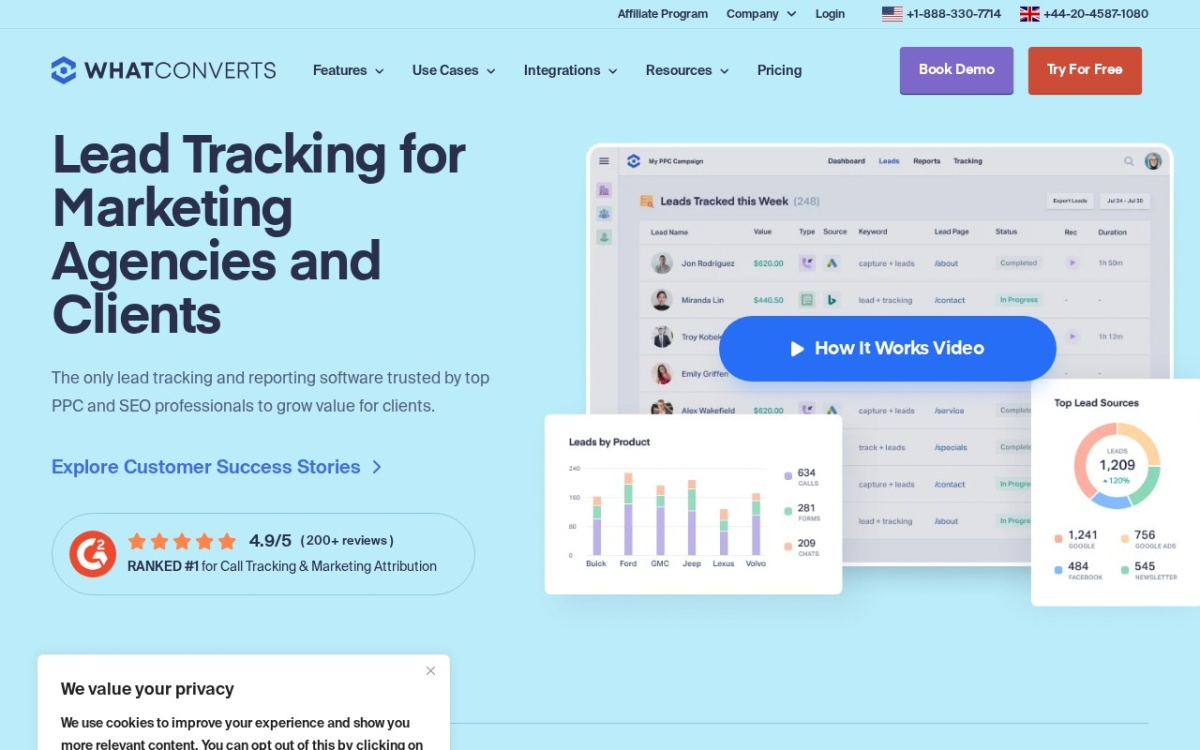
Another agency owner in a mastermind group listened to my renewal story and asked one question: 'You're not running call tracking? How are you even invoicing with a straight face?' Her whole shop ran on WhatConverts. The pitch, as she put it: every marketing channel gets its own tracking phone number, every call and form and chat gets captured as a lead, and every lead carries its source with it - campaign, keyword, landing page, all of it. Not analytics. Evidence.
I set it up for the HVAC client that week. Swapped the site's phone number for a dynamic tracking number, separate numbers for the Google Business Profile and the ads, forms wired in alongside. The first Monday report loaded and I sat there scrolling with the specific feeling of someone who has been arguing a court case for a year and just discovered transcripts existed the whole time.
What changed in how I actually work
Reports became receipts
- Every lead now shows its origin: this call came from this ad, searching this keyword, landing on this page.
- My monthly report stopped being charts of activity and became a list of booked jobs with sources attached.
- For me: the renewal conversation happened one month later. It took eleven minutes.
Budgets stopped being guesses
- One campaign everyone loved turned out to produce clicks and almost no calls - we killed it and moved the budget to a boring service-area campaign that quietly booked jobs all along.
- Call recordings showed which leads were actual customers versus solicitors, so we optimized toward quality, not volume.
- For me: I stopped defending my line item and started deciding where his money worked hardest. Different job. Better job.
The honest fine print
WhatConverts costs real money on top of the ad spend, which stings for very small accounts - my rule now is that it pays for itself the moment a client spends enough that one misallocated month costs more than the subscription, which is a low bar in the trades. Setup took me an afternoon per client, and number-swapping requires doing it properly so the business's real number stays consistent where it matters. And attribution is evidence, not omniscience - the home-show handshake still books jobs no tracking number will ever see. I say that in my reports now too. Clients trust the numbers more when you are honest about their edges.
The new me
The deeper change is one I did not expect: I stopped dreading my own invoices. There is a quiet impostor feeling that comes with billing for work whose results you cannot see, and it leaks into how you present, how you price, how you sleep. Every client of mine runs on call tracking now - it goes in during onboarding week, before the first campaign ever launches. The Tuesday-call silence has not happened since, because the answer to 'what am I paying you for' is now a report with names, phone numbers, and sources on it.
If you bill for marketing, hear me
Whether you are an agency or a business owner running your own ads: if your leads arrive by phone and you are not tracking sources, you are not doing marketing, you are doing weather. WhatConverts has a free trial, and one month of real attribution will tell you more about your marketing than a year of click reports. Our full review has the scoring and pricing details.
Honest disclosure: the link above is a partner link - if you sign up through it, this site may earn a commission at no extra cost to you. The silences, the spreadsheet Fridays, and the eleven-minute renewal are all mine. - Gina
Community discussion
Enjoyed this story? Share your thoughts below.